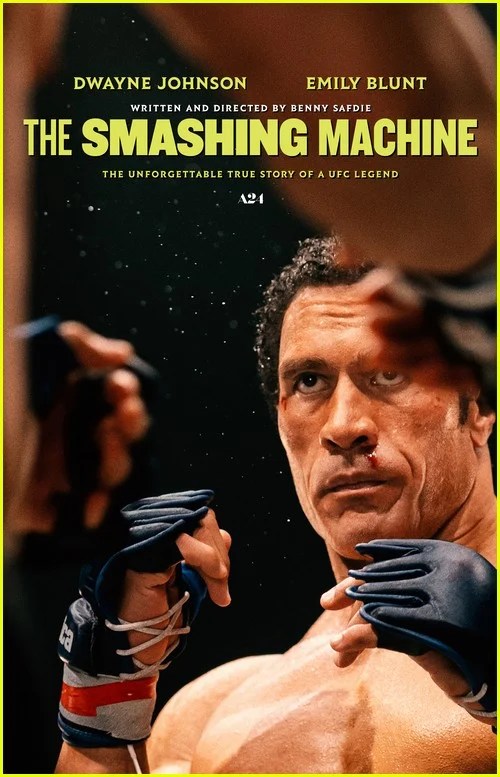
“I’ve never lost a fight.”
So many times in the past, I heard Dwayne Johnson talk about his big blockbuster projects and how he doesn’t make movies for the critics…he makes them for the fans. That hasn’t always worked out in his favor, especially after the major flop that was Black Adam, and it seems that loss spurred Johnson to finally make a movie for himself. It’s his best performance to date, grounded and gritty and deeply human, and it comes in a biopic exploring the cost of obsession. The Smashing Machine didn’t break box office records nor was it one of the year’s best reviewed, but it gave Johnson the opportunity to look at himself in the mirror and shatter expectations. His turn here was long overdue.
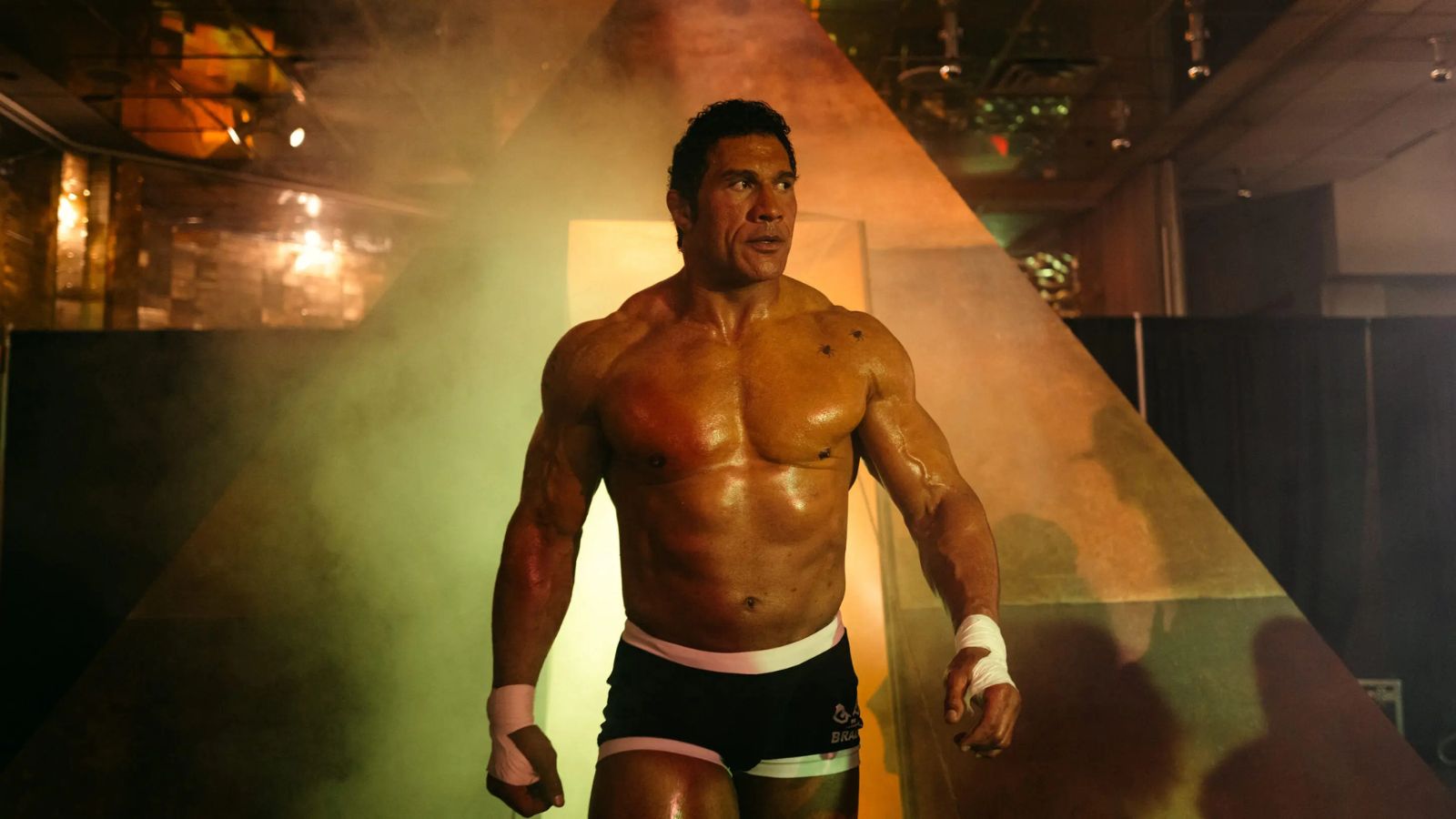
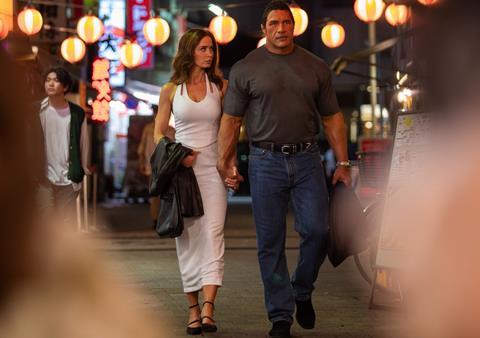
From the onset, The Smashing Machine immediately looks the part, like something ripped off a public access station from a neighbor’s basement box TV. Everything about the production design here is Oscar worthy, helping transport us into the late 90’s and early 2000’s. Mark Kerr (Dwayne Johnson) makes his debut in the new Ultimate Fighting Championship, a sport just in its infancy as far as popularity goes. He’s a bruiser, breaking his opponents and then immediately checking in on their well-being. Kerr is what they call a gentle giant. Outside the octagon he’s just as soft, squaring off with his own demons and testing his mental fortitude as he battles substance abuse. The toxic, rollercoaster relationship his has with Dawn (Emily Blunt) isn’t helping.
A lot of The Smashing Machine involves Kerr’s utter inability to even comprehend losing, as well as his bouts getting high on painkillers. As the for former, we understand this guy is so driven the thought of not winning doesn’t enter his brain. As for the latter, Kerr’s struggles with addiction aren’t openly explored enough to create a dialogue between the people on-screen and the audience. There’s a scene where he overdoses, and a few small conversations about it (I was happy to see his excessive withdrawal sweats addressed at one point), but when it’s such an integral part of this real man’s journey, I would’ve thought it’d be more front and center.

Writer/director Benny Safdie does some tremendous work here, crafting something that feels particular to a certain period. He keeps his camera outside the ring, allowing it to be Kerr’s space inhabited by Dwayne Johnson, and some of the best scenes come from Safdie’s ability to inject deep emotion into surroundings. When Dawn is riding an old spinning Gravitron at a fair and twists around recklessly, we know that she’s a loose cannon. When Kerr watches a demolition derby, we can see in his eyes that he sees himself in the beat up bodies. Little things like that add to the storytelling. The Smashing Machine has a very awkward ending that cuts to the real life Kerr today, but up until then the film is a humble portrayal showcasing the dangers of ego and pride, all through a movie star who seems to have finally gotten over them.
“Am I going to hurt him before he hurts me?”
Rating: 3.5 out of 5
 Log's Line