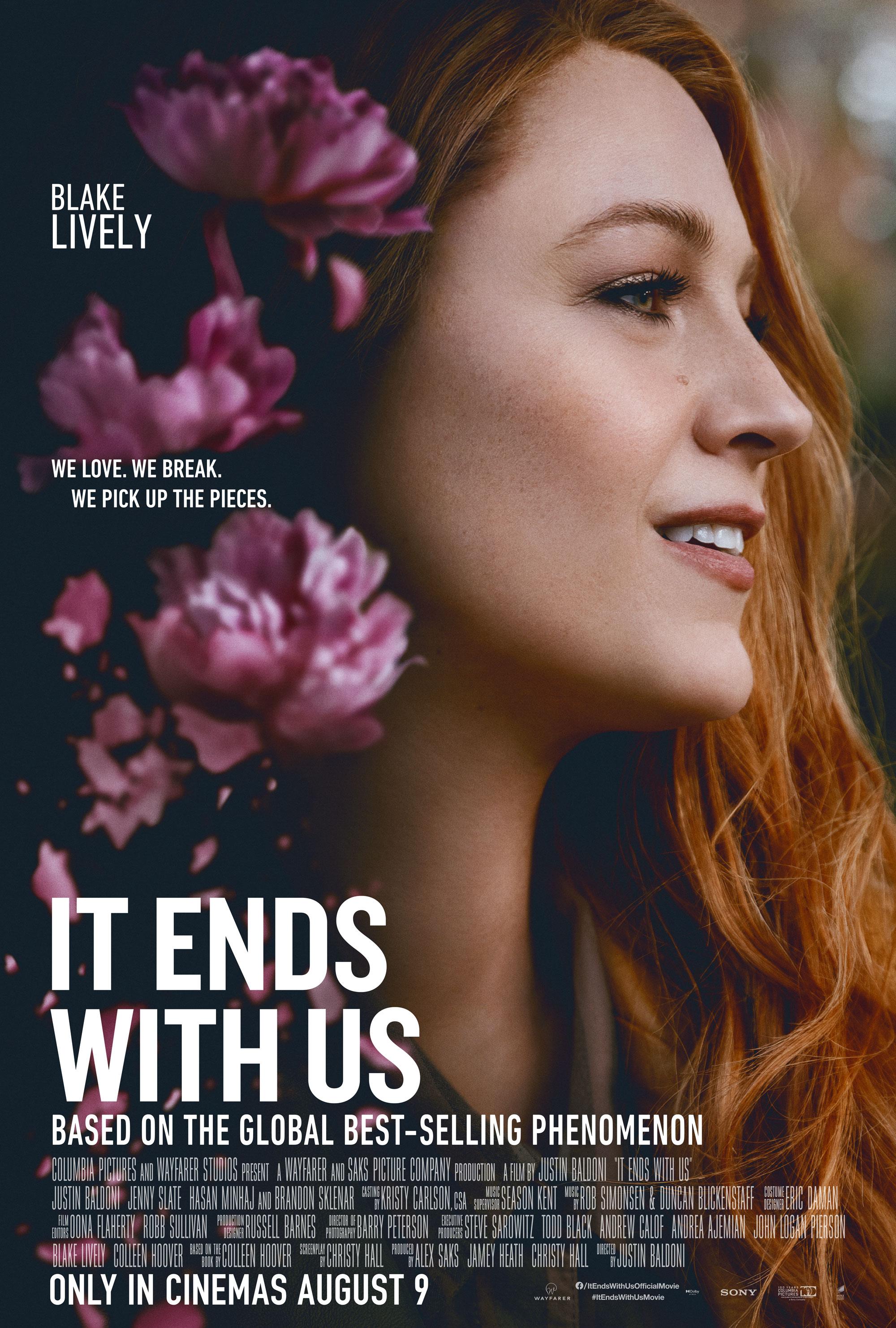
“It was a beautiful mess.”
Well-meaning, thoughtful, and yet too long for its own good, It Ends with Us is a mildly successful adaptation and depiction of trauma and all of its many snakeskins. The story shows how seeds of fear are often planted in childhood, how they can continue to grow and eventually flower as we get older, and it gives agency to the victims who refuse to be labeled as such. It’s a melodramatic movie with a heartbeat and a voice, and it manages to make you understand both sides while clearly aligning with the right one. There’s a sneaky level of subtlety at play here, even if it isn’t long-lasting.

The film opens with Lily Bloom (Blake Lively) walking out on her late father’s funeral, lost for words due to reasons we come to know later on. The scenery cuts from Maine to rural Boston. Lily plans to open a flower shop, runs into a handsome man named Ryle (Justin Baldoni) on a rooftop, and she begrudgingly begins dating the playboy Neurosurgeon after playing hard to get. He’s convincing, conniving, and altogether controlling. Again, for reasons we come to know as the minutes tack on. And that’s pretty much how It Ends with Us develops its dramatic core. It gives us a taste, promises more later, and uses time jumps to help tease and deliver gut punches that might have been better delivered as unexpected haymakers. The film doesn’t necessarily suffer from its roundabout storyline; they represent the memories carefully and painfully locked away. But I think it could have been more concise too.

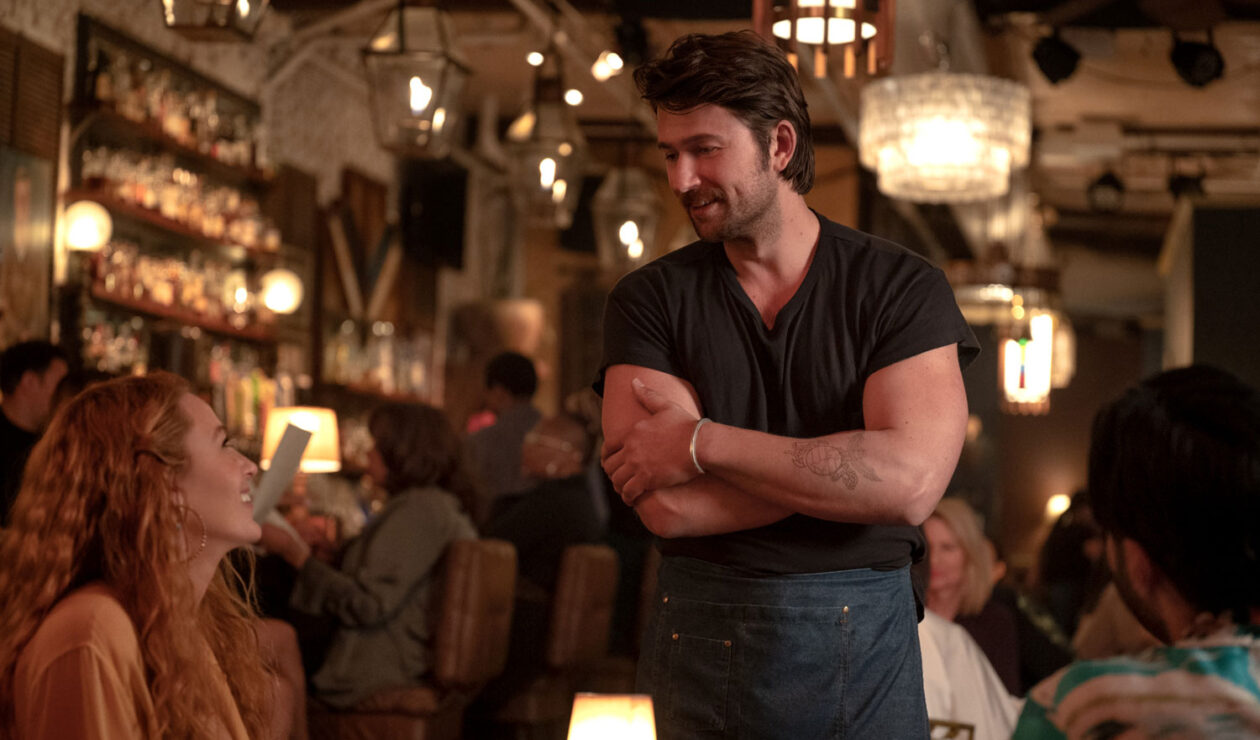
A date night dinner reunites Lily with Atlas (Brandon Sklenar), now the talented head chef at a local restaurant and once her teenage crush. She’s taken aback, Ryle’s bonafide “fuckboy” jealously fumes, sparks ignite. Bruises become hard to cover with makeup and the violence becomes overt. And while the visually muted nature of the domestic disturbances bothered me at first, it became clear that co-star and director Baldoni wanted to depict the experience through the survivor’s lens. It’s all hazy, hard to believe, and the details are eventually filled in after the fact when choices are met with consequence. I can’t speak on the subject directly and could absolutely be wrong, but it felt like the film handled ugliness carefully, and it doesn’t make everything too pretty either.
Having not read the book, I wasn’t sure what to expect from Colleen Hoover’s source material going in (besides the hilariously on the nose name choices), and it seems to have been portrayed here as a blend of 50 Shades of Grey’s Autobahn sexiness with the slow burning self-discovery of Eat Pray Love. And it’s a shame that on-set tensions seem to have put an indefinite stall on the next chapter, which would have had the space to be a film unhindered by trauma and fueled by grace. As is, It Ends with Us will appeal to audiences who like drama scattered with lust and laughs, and will cast a spell on anyone who doesn’t cringe when hearing the film’s title literally and dramatically read out loud in a hospital room.
“If you find yourself in a position to fall in love with somebody again, just fall in love with me.”
Rating: 3 out of 5
 Log's Line