
“Do you guys every think about dying?”
An entire world of make believe comes to lavish life in Barbie, a gorgeous looking film that visually sparkles as much as it sparks conversation with what it’s willing to say about societal standards, and yet the picture never feels tonally consistent either. It’s Clueless meets The Wizard of Oz with a little bit of the musicality of Grease thrown in for good measure, and in that regard I can’t say I’ve ever seen a movie quite like it before. It’s entertaining, funny, introspective, and better than I ever could have imagined it would be. But I wasn’t sold by the third act or its lack of logic and explanation. Barbie is a trip; I still don’t buy the final destination.
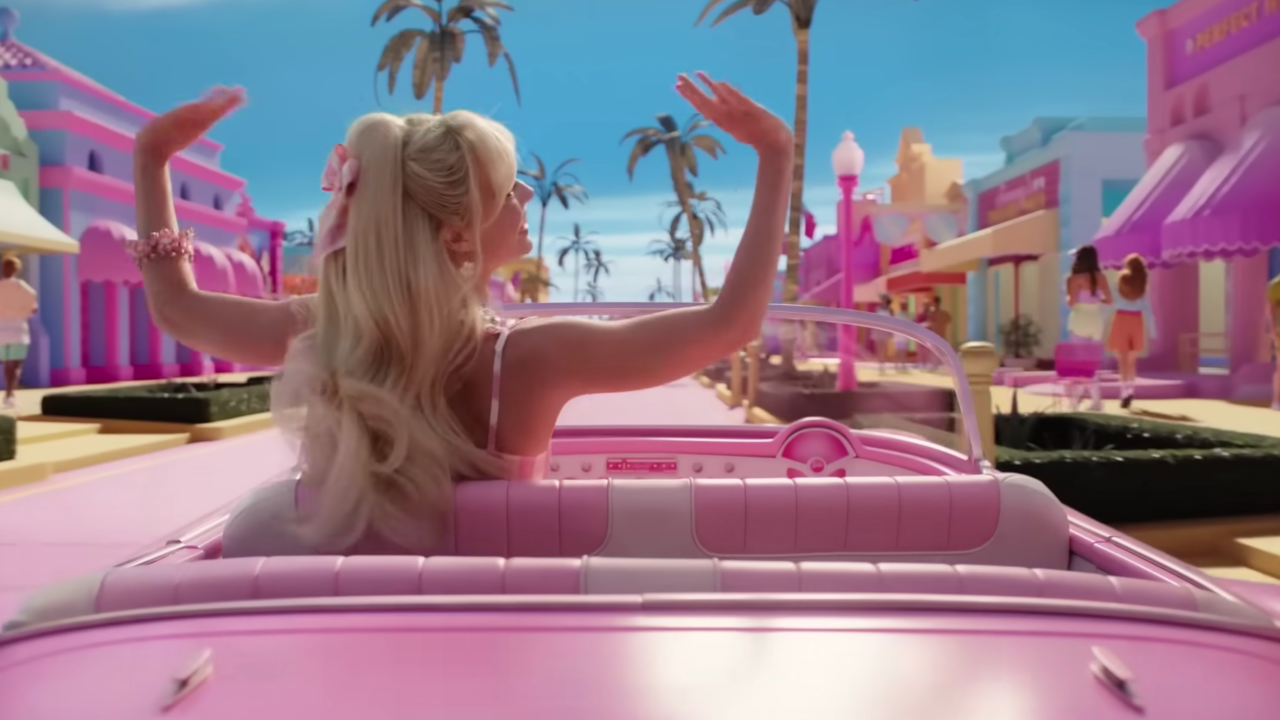
Turns out that life doesn’t have to be in plastic to be fantastic. In the pink and borderline cloudless Barbieland, everything seems to be rosy and easy. Stereotypical Barbie (Margot Robbie) wakes up smiling and energized, floats down to her convertible, ready for another perfect day full of perfect hair and perfect meals and feet molded for high heels. You can almost imagine Hoku’s song “Perfect Day” playing in the backdrop, probably because it opened Legally Blonde and that film comes to mind throughout as well. Barbie is living her life in technicolor and having a blast whilst doing so. But one night while dancing she unexpectedly asks out loud, “Do you guys ever think about dying?” The party comes to a halt until Barbie saves face. However, the ball is already rolling. She’s changing and feeling something new. We’re unsure why the existential dread kicks it, yet it feels familiar. Even a bit human.
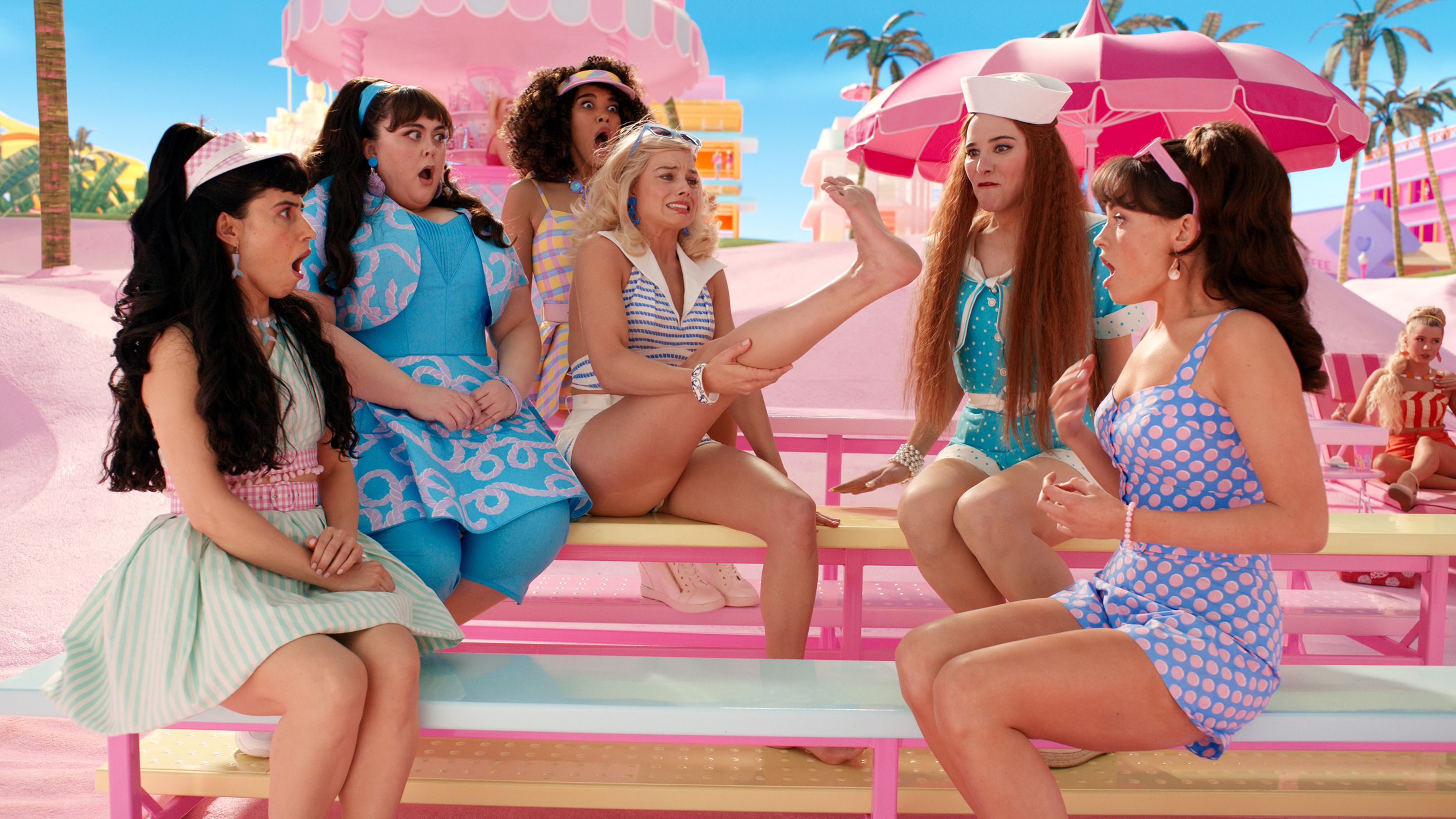
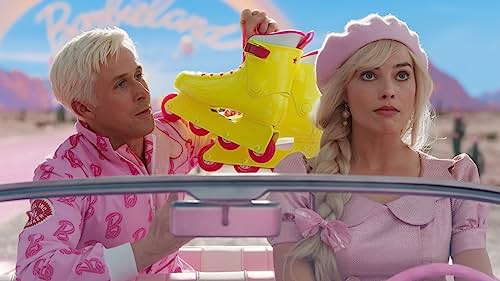
Barbie’s heels hit the ground and gasps come from the other barbies, shocked by the first glimpse of a female flat foot, and off goes Barbie towards the realm of Weird Barbie (Kate McKinnon, perfectly encapsulating what happens to a doll when someone like Angelica Pickles gets to torture Cynthia). Barbie learns that she must travel to the real world, find the child playing with her, and calm the nerves which are affecting her so deeply. Unfortunately for Barbie, Ken (Ryan Gosling) hides away in her convertible and hijacks her road trip, because without Barbie the listless Ken lacks meaning. Their journey to the real world shows how Barbieland’s matriarchy is a stark inverse of the perils of patriarchy, and some of the best comedy in the film comes from these moments. Even as a grown man, Gosling seems to channel the peacocking showmanship of his Disney youth, and he brings a tenderness to a character whose intentions are good despite his deep ignorance and easily satiated taste for power. Ken wants to mean something to someone else, but he doesn’t know how to mean something to himself first.
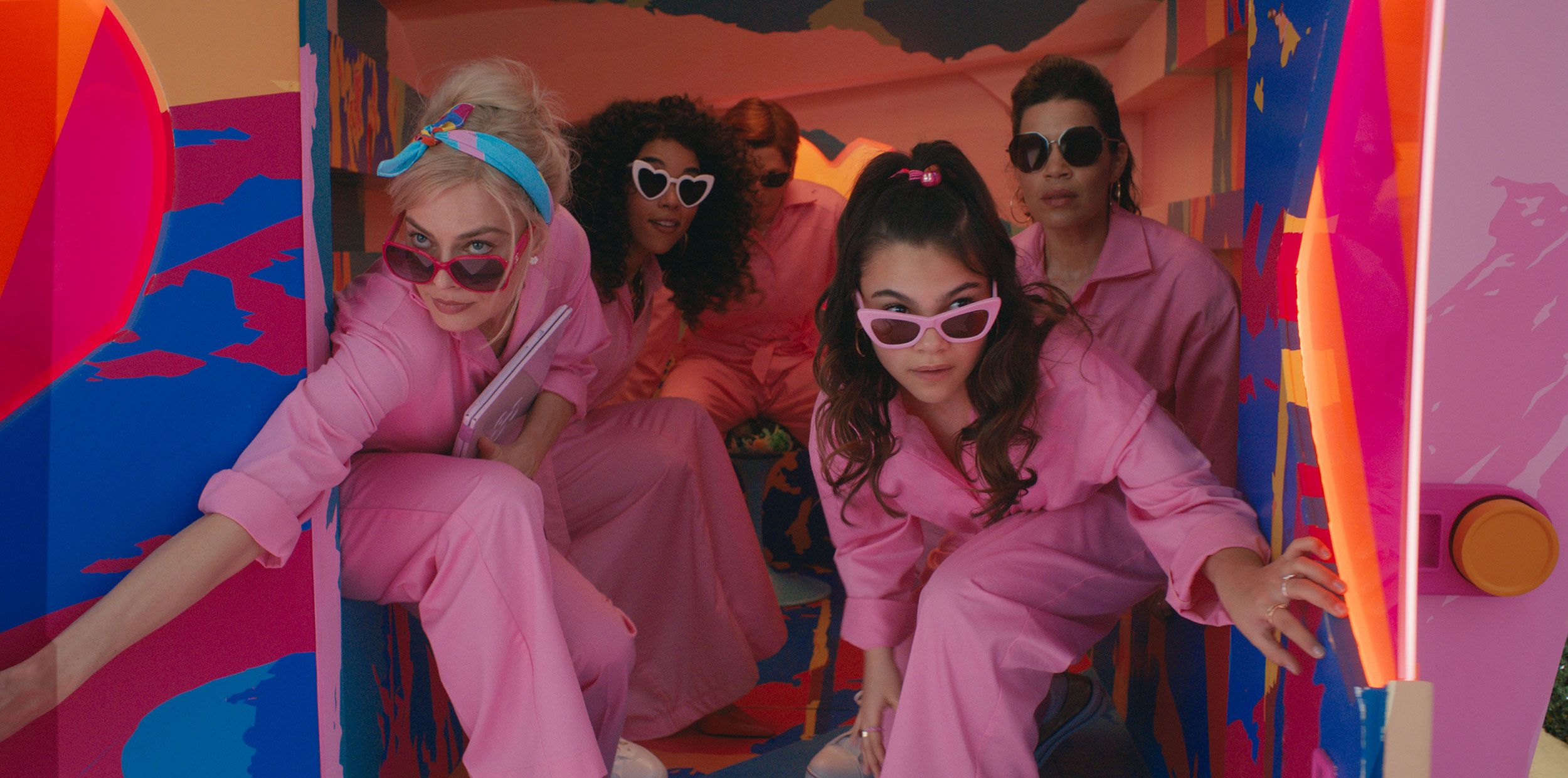
The script here is inventive yet tonally uneven. The production design is Oscar worthy. And America Ferrera nearly steals the film as Gloria, the longtime Mattel employee whose own issues with her past and her teenage daughter Sasha (Ariana Greenblatt) cause the Stereotypical Barbie to question anything and everything. Barbie never strays from its central theme of discovering purpose even though the plot is guilty of loitering and littering and meandering, and despite the progressive feminism on display throughout, Greta Gerwig’s film felt like it wasn’t sure how to come to a close either. There were too many instances where I didn’t know how or why something was happening, and the final act still seems to be a cop out, only slightly elevating the entire conceit of 2000’s Disney TV original film Life-Size starring Tyra Banks and Lindsay Lohan. If anything that movie was more focused, although far less intellectually engaging. Gerwig’s use of real VHS home footage brings heart and soul to a picture in search of humanity, but it feels a little too late.
At this point, the addition of Will Ferrell as the Mattel CEO is a reliably unwelcome party in my books; Ferrell has shown he can be a fine dramatic actor and sometimes even subtle with comedy, but his typical kicking and screaming charade continues to grow more off-putting over time and lends the already confusing final act no favors. Barbie is a great concept, albeit muddled and messy. It feels like an amalgamation of Elf and Ocean’s 8 and any number of Michel Gondry’s highly stylized pictures. The ending echoes Harry Potter and The Deathly Hallows: Part 2, itself inspired by Albert Brooks’ hilarious Defending Your Life and the monumental 1946 picture A Matter of Life and Death. Barbie is iconic as a brand, and the film has deservedly amassed over a billion in sales, most of which I imagine is due to the credit of its casting. Gosling is awards worthy as the supporting and singular accessory Ken, and Robbie continues to prove herself as one of the industry’s most formidable and definitive performers. She simply is Barbie at each and every turn. No two other performers could have played the roles better. We believe in them, together and then individually, and Barbie shows itself to be as deeply empathetic and emotional as it is out of the prepackaged box. It’s a hit for a reason.
“Humans have only one ending. Ideas live forever.”
Rating: 4 out of 5
 Log's Line